Sabigo · Founder, product, design and engineering · 2026
The transport app Port Harcourt never had.
Sabigo shows you how to get anywhere in the city by public transport, bus stop by bus stop, and moves groups of people to the places they are going together. People who ride the buses teach it the city.
Chapter 1 · Why
One dark night, I missed my bus stop.
I got around Port Harcourt by public transport. One night the bus came back from the opposite side of the road, the landmark I was watching for didn't match, and I missed my stop. I rode to the last bus stop and took another bus back.
The maps on my phone knew the roads. They didn't know the buses: which one goes where, where to enter, what people call each stop, where to get down. That knowledge lives in people's heads, and you get it by asking. Sabigo is my attempt to write it down for everyone.
Chapter 2 · Directions
Find the bus that goes there.
Directions are the reason people open Sabigo, and they are free. You type a place, a bus stop or an event. Sabigo shows how to get there by public transport and then guides you as the bus moves: where to enter, where to get down, bus stop by bus stop.
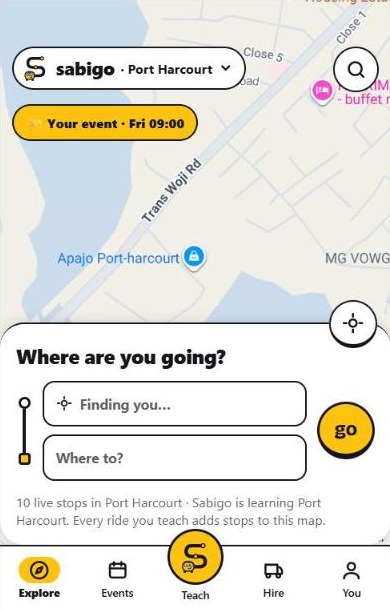
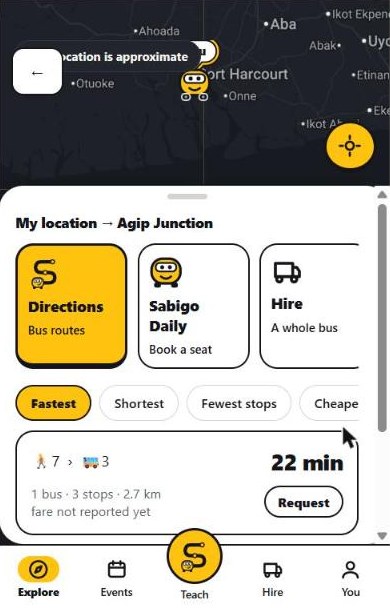
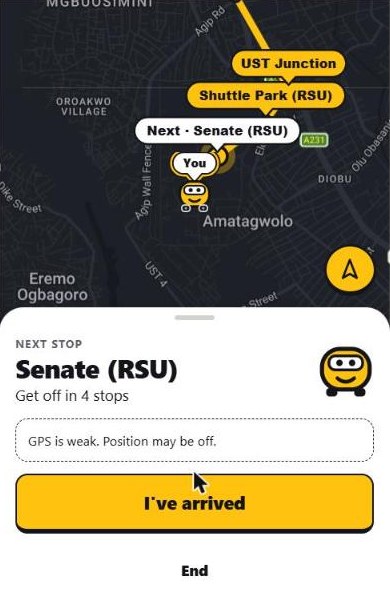
The lines on Sabigo's map are Sabigo's own: drawn from real rides and checked, not a road line borrowed from a general map. A road map says where a car can go; a route line says where the bus actually goes.
Chapter 3 · Teach
The city teaches Sabigo.
No one has a complete map of Port Harcourt's buses, so Sabigo learns from passengers. Anyone can teach it a bus route (ride the bus as usual and the line draws as you move), a bus stop (a photo, what people call it, a landmark to look out for) or a place: a church, school, market, event centre or business.
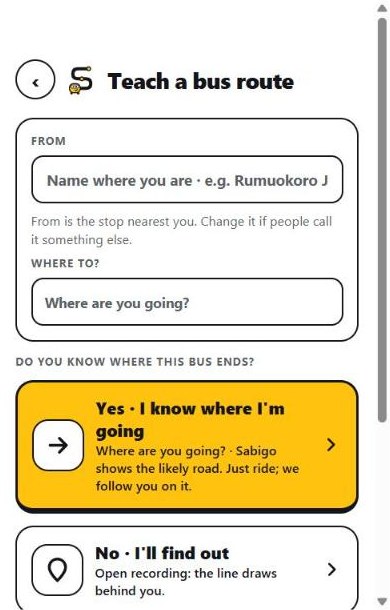
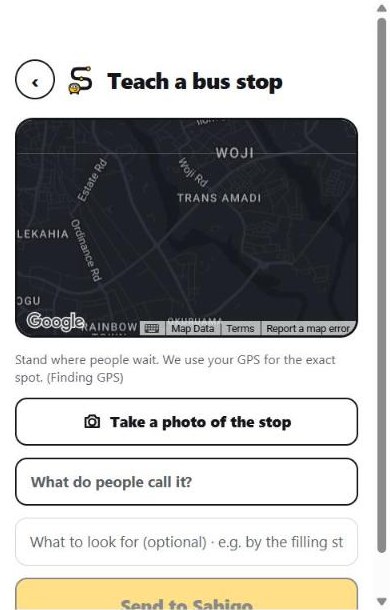
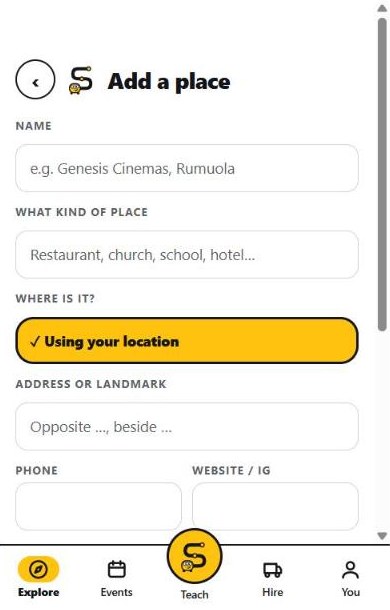
What people teach stays private until Sabigo's team checks it, stop by stop. Once it is live it helps everyone, and it carries the name of the person who taught it first.
Chapter 4 · Moving people together
Hire a bus, organise a trip, get guests to an event.
The same knowledge of routes and stops moves groups. Sabigo doesn't own buses: a bus from a motor park near the trip takes it.
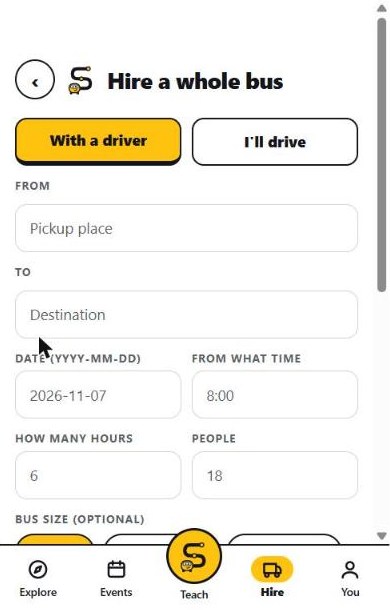
- Hire. A whole bus for events, church programs, school field trips and days out. Tell Sabigo where and when.
- Organise transport. Same venue? Set the date and the pick-up bus stops, share the link, and your people join. One bus, everyone together.
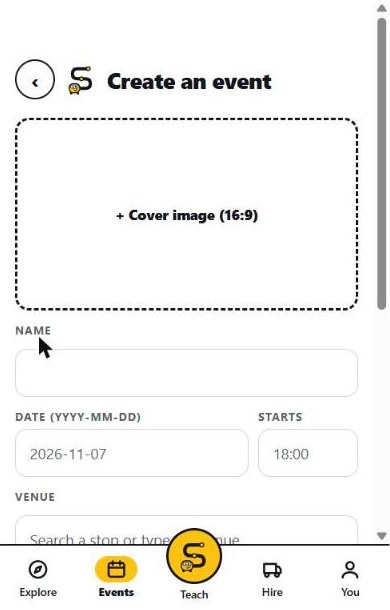
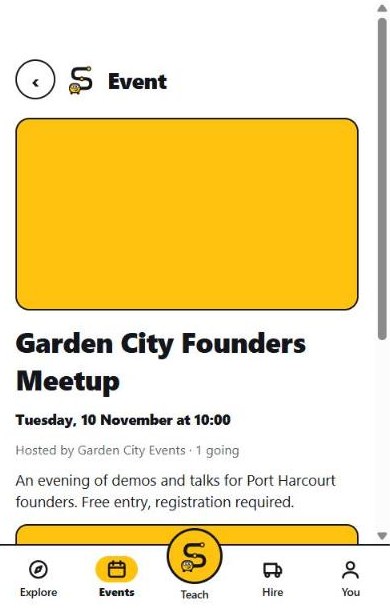
- Events. Create your event, share one link, and guests register and see how to get there: a seat on the organiser's bus, or a bus for their group.
Chapter 5 · The business
Directions bring people in. Moving people pays.
Directions are the way in: they are why people use Sabigo. Hire, group transport and event transport can start now, because the buses already exist in the motor parks. Sabigo earns when it moves people: a bus you hire, a seat, a paid event ticket. Payment happens in the app, through Paystack.
Owners of buses can partner their vehicle and drivers can drive Sabigo trips. Sabigo Daily, a seat on a bus that runs your route every morning and evening to work or school, for you or your whole company, comes last, route by route, when Sabigo can run it well. Until then people can request their route.
Directions and Daily share the same routes, so the two feed each other: someone who came for directions sees when Sabigo Daily serves their route.
Chapter 6 · How it is built
One app, one city graph.
- One set of screens for the web and Android (Expo), so the app at sabigo.co/app and the phone app are the same product. Most people use it on a phone, so the web app is mobile-first.
- A city graph in Postgres with PostGIS and pgRouting: bus stops, places and the hops between stops. A hop is the path the bus actually travels, never a straight line between two stops.
- Review before public. Contributions go into a review queue; only approved stops and routes reach directions. Raw ride GPS is archived, not deleted.
- Movable by design. Sign-in, files and server functions sit behind small helpers, so Sabigo isn't locked to one backend provider. The site runs on Cloudflare Workers.
- Every screen is designed first, with research from real apps, approved, then built for web and Android together.
The research behind the city graph is on Research.
Chapter 7 · Where it is going
Port Harcourt first. More cities next.
Sabigo starts with routes into Rivers State University in Port Harcourt. After Port Harcourt come the major Nigerian cities, then other African cities, then any city where people move by public transport that the maps don't know.
← Projects